
Do not go into an abandoned mine. Not a little way, not with a good light, not with a friend who has done it before. This site records where BC's old mines are and what happened in them. It does not invite entry, and nothing on it indicates a mine is safe.
A working mine has ventilation, ground support, inspections and a rescue plan. An abandoned mine has had none of those, and it has been falling apart the whole time.
Why Frank Goes In, and Why You Should Not
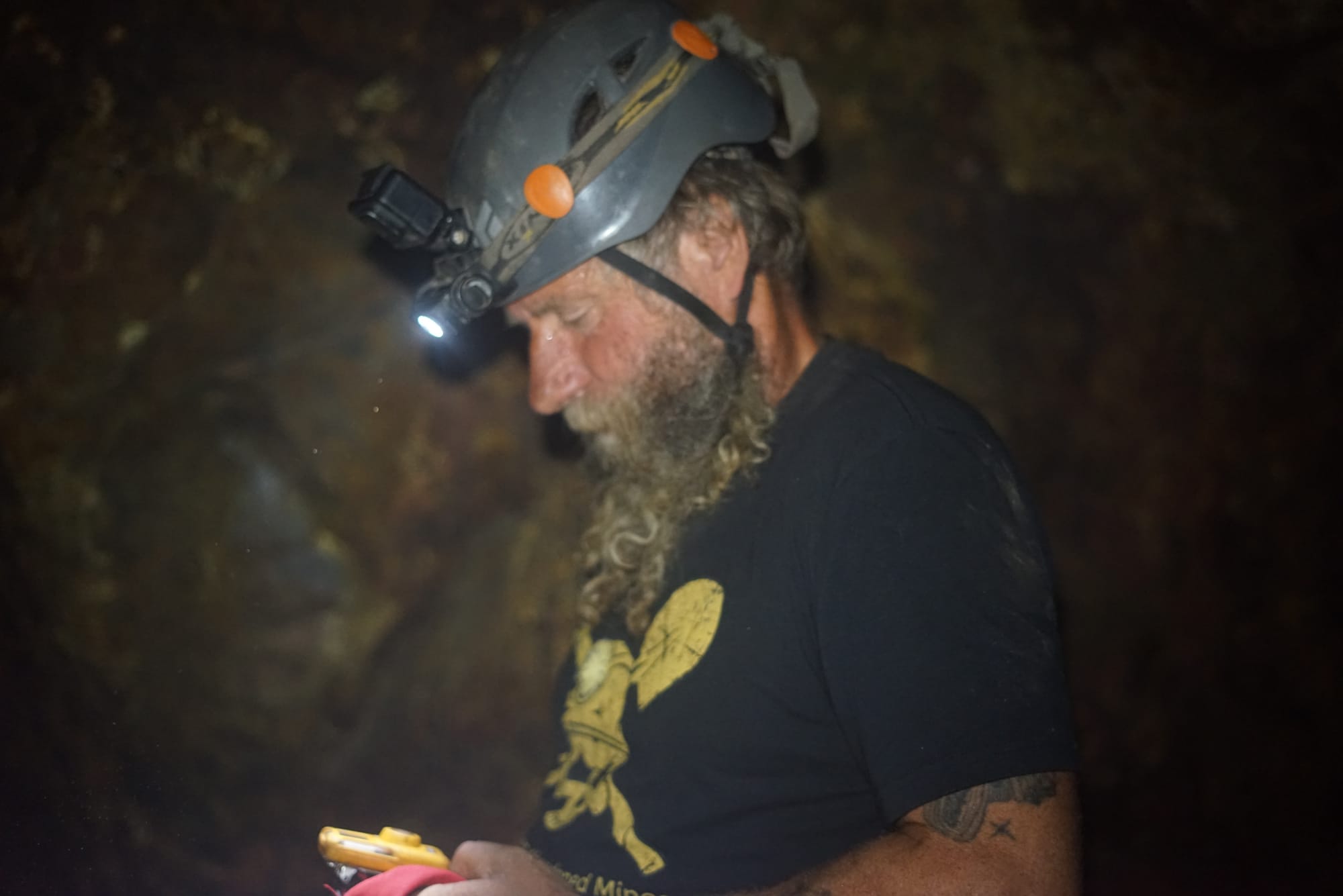
Frank Schlichting has explored old mines for most of his adult life. He is exceptionally fit, he has years of experience underground, and he understands abandoned mines in a way very few people do: how old ground behaves, what the air can do, and when to turn around. He goes in with the right equipment and often with partners.
None of that makes an old mine safe. The danger is still there every time he goes in, and more so when he goes in alone, as he often does, because few people want to go into the most difficult and treacherous mines. What Frank's experience provides him is the ability to judge risks that most people cannot even see, and that judgment took decades to build. It cannot be borrowed by watching a film.
His reason for going is the history of the mine. These workings, and what was left in them, are disappearing. Once they collapse, the record of the men who worked there goes with them. Frank films them so the rest of us can see what is there without going underground, and he has always told the people who watch not to follow him.
What Kills People in Old Mines
The air. Old workings can hold air with too little oxygen or gases that poison. Rotting timber and some minerals use oxygen up, and where the air no longer moves, it is not replaced. You cannot count on seeing, smelling or feeling it. Air with too little oxygen can knock a person unconscious in one or two breaths, with no warning.
Poisonous gases can collect in low places and along the floor, so the air can be fine at the entrance and deadly a short way in. Bad air can also go unnoticed on the way down a slope or a ladder and take hold on the climb back when you are breathing hardest.
Shafts and drops. Vertical openings can be hundreds of feet deep. They may be hidden by brush, snow, water, rubble or old planking that will not hold a person. They can be found in tunnels, on the surface, in the dark, and on the floor.
Falling rock and collapse. Rock that has stood for a hundred years can come down today. Timbers that look solid are often rotten through, and touching one can be enough to bring the workings down. A fall does not have to hit you to kill you: it can close the only way out.
Water. Many old mines are flooded in part. Still water hides holes in the floor, and its depth is difficult to judge. Pools are common at the bottom of shafts. The water is cold, and cold-water shock can kill even a strong swimmer.
Explosives. Old dynamite and blasting caps were sometimes left behind. They can go off if touched or stepped on. Never touch or move anything that might be one.
Being alone in the dark. Don't count on a phone signal underground. Workings branch and look alike. A dead light, a twisted ankle or a wrong turn becomes an emergency, and there may be no one to hear you.
The ropes, helmets, lights and gas meters do not change this. No recreational gear protects a person from bad air, a collapse or a shaft they did not see.
The Ground Around a Mine Is Dangerous Too
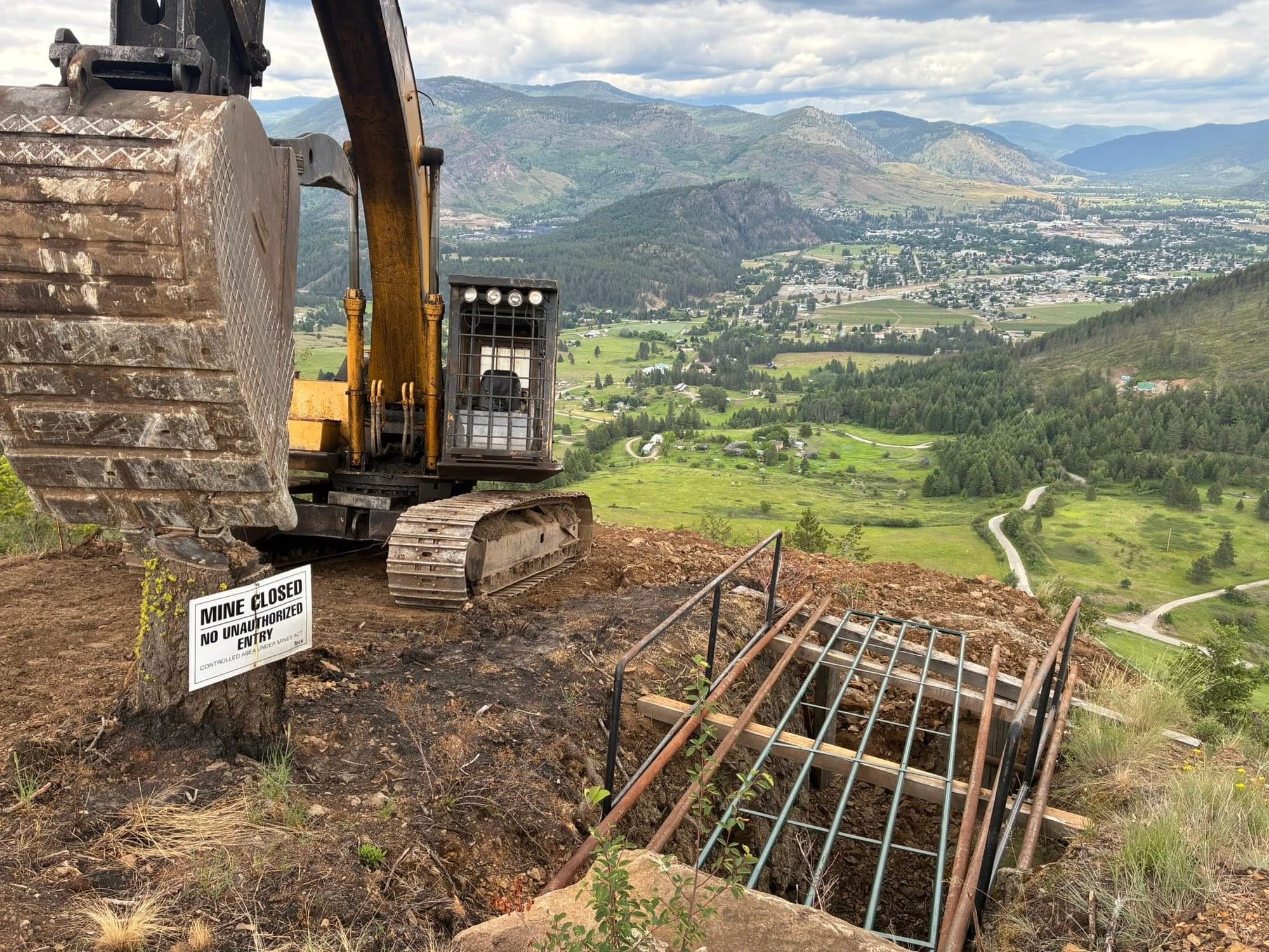
You do not have to go inside to be hurt. The ground near a shaft is often unstable and can slide in. Edges crumble. Stay well back from any opening, and keep children and dogs close.
Many old mines are on private land or on ground where someone else holds rights. Being able to walk up to one is not permission to enter it.
If Someone Is Hurt or Missing in a Mine
Call 911. Do not go in after them. People who went in to help died the same way, from the same air or ground. Even trained rescue teams are at serious risk in old workings. Tell the dispatcher exactly where you are and what happened, stay outside, and wait where rescuers can find you. If you have no signal, send someone out to obtain one while another person waits at a safe distance from the opening.
If You Find an Open Shaft or Tunnel
Stay back. Do not throw things in or lean over to look. Note where it is and tell the Province's mines office: 833-978-9798 or mines.inquiries@gov.bc.ca.
About the Films on This Site
Frank Schlichting has spent decades documenting BC's abandoned mines, and his films are on this site. He tells the people who watch them not to follow him. The films are here so that these places, and the work of the men who built them, can be seen and remembered without anyone else going underground.
What This Site Does and Does Not Do
FranksMap.com shows where mines are, because people look for them anyway, because the positions in the Province's public records are often wrong, and because getting lost looking is a danger in itself. It shows the roads and trails that public maps record.
It does not give routes to workings or ways in. It does not say any opening is safe. It is a resource that is not to be relied upon. Conditions change, and a road or trail on file may not be open or passable.
See a Mine the Safe Way
If you want to stand inside a mine, take a guided tour at a mining museum, where the ground is supported and someone is responsible for bringing you back out. The Britannia Mine Museum at Britannia Beach, on the Sea to Sky Highway, takes visitors underground by train as part of a visit.
Stay out. Stay alive.