History & DiscoveriesThen and Now
One PhotographHistory & Discoveries
The Journal →Phoenix From the Hill, 1908: What One Photograph Shows
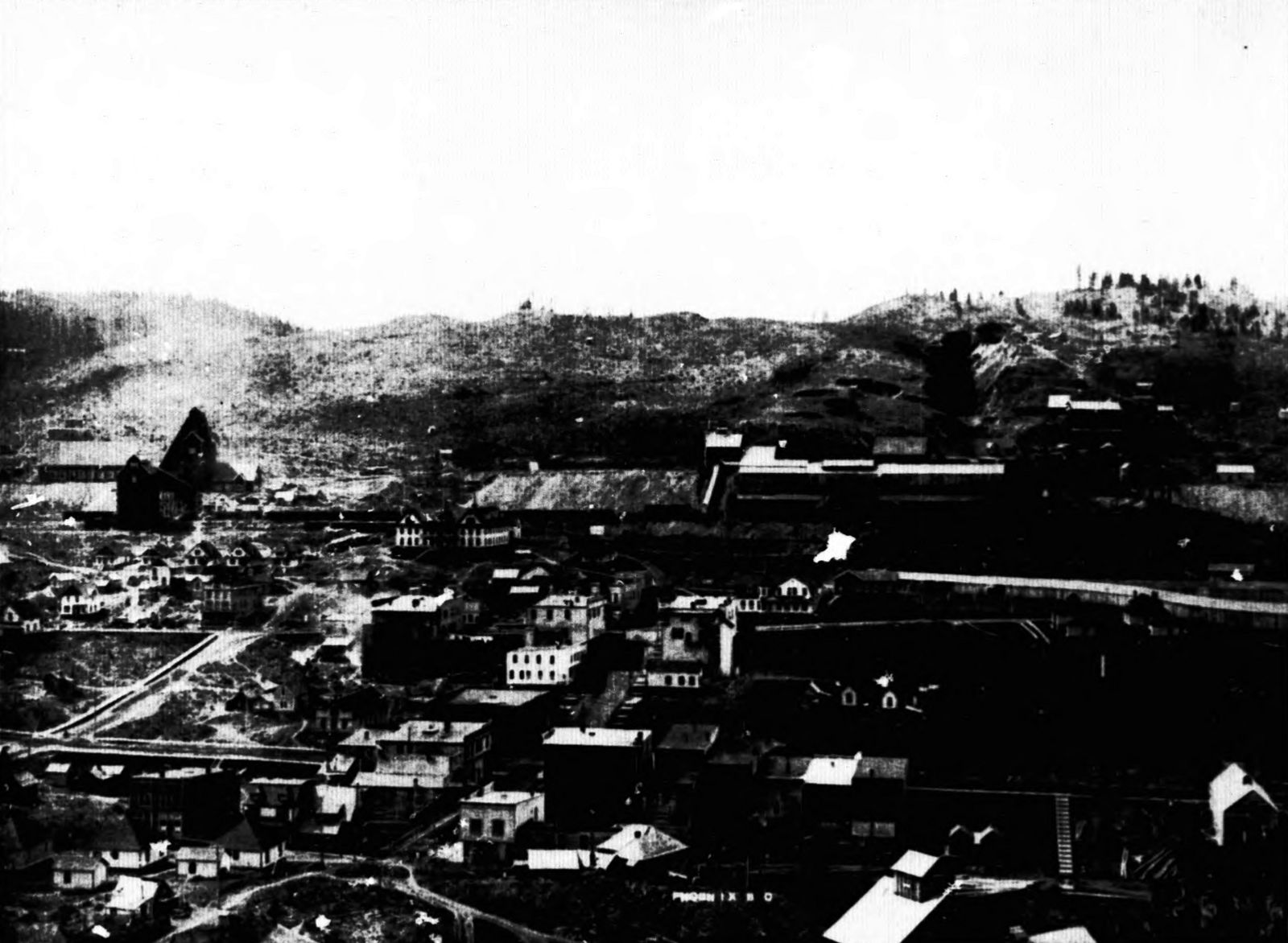
The Geological Survey’s photographer stood above the Granby glory holes and looked down on a city of two thousand. Eleven years later it was empty, and by 1978 the pit had taken the ground it stood on. A close look at Plate I.
What is known
Where the photographer stood, above the glory holes; the year, 1908, and the plate number, from the memoir; the lettering PHOENIX B.C. on the negative.
What is inferred
The season. The memoir does not say; the bare ground and the lack of snow suggest summer, and no more than that.
The man with the camera is McRae, whose plates illustrate O.E. LeRoy’s survey of the camp, and he has climbed above the town to get the whole of it into one frame. Between him and the first roofs lie the glory holes of the Granby Consolidated, ore taken open from the surface and drawn down through the workings beneath, with the headframes and ore houses of the main surface plant standing over them. Below that, in rows along the hillside, is the city.
When the Geological Survey mapped the camp in 1908 it put the population at about 2,000. By 1911 the estimates ran to 4,000, and the town had two railways, a hospital, a brewery, moving pictures, tennis courts, a skating rink and, as Lois Haggen recorded in 1957, seventeen saloons open around the clock. It stood 4,300 to 4,600 feet above the sea, the highest incorporated city in Canada, and its magistrate, Willie Williams, called himself the highest judge in the highest court in the highest city in Canada.
The photograph was taken in a working year. The province’s table records 933,260 tonnes of ore mined at Phoenix in 1908; the peak came in 1912, at 1,134,600 tonnes. All of it went down the hill by rail to the Granby smelter at Grand Forks, ore so nearly self-fluxing that it smelted with little more than coke.
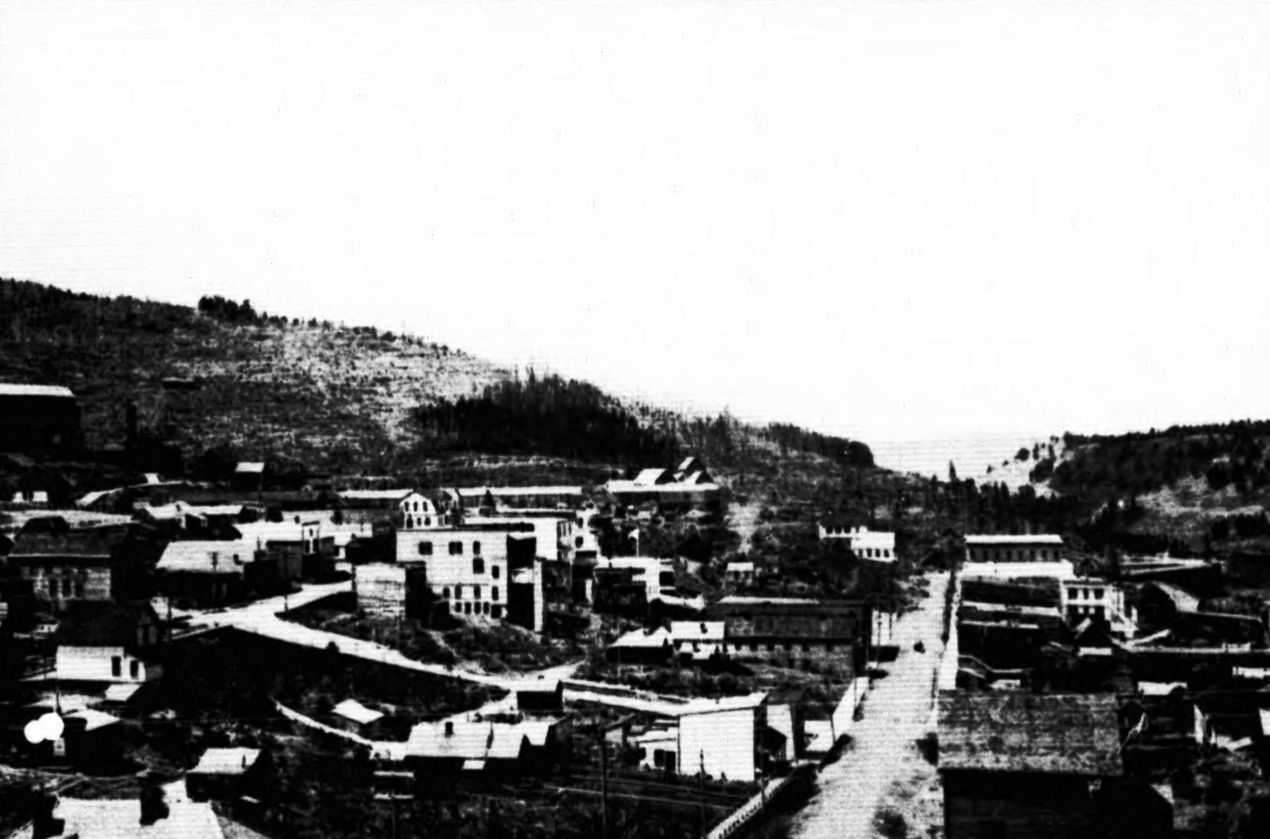
Two years after Plate I, in August 1910, fire took much of the town. “All the buildings being frame they were eaten up like matchwood by the fire and the heat was terrific,” the Phoenix Pioneer wrote. The town rebuilt, and the war years that followed were the busiest in the mine’s life.
Then the war ended and the copper price went with it. The ore had thinned, and a strike in the Crowsnest coal fields cut off the coke the smelter burned. Granby closed the mine and the smelter in June 1919, and the town emptied within months. In 1920 the wrecking crews came for what was left standing; people came in from the towns around, cleaned out the houses, and took the lumber and the bricks.
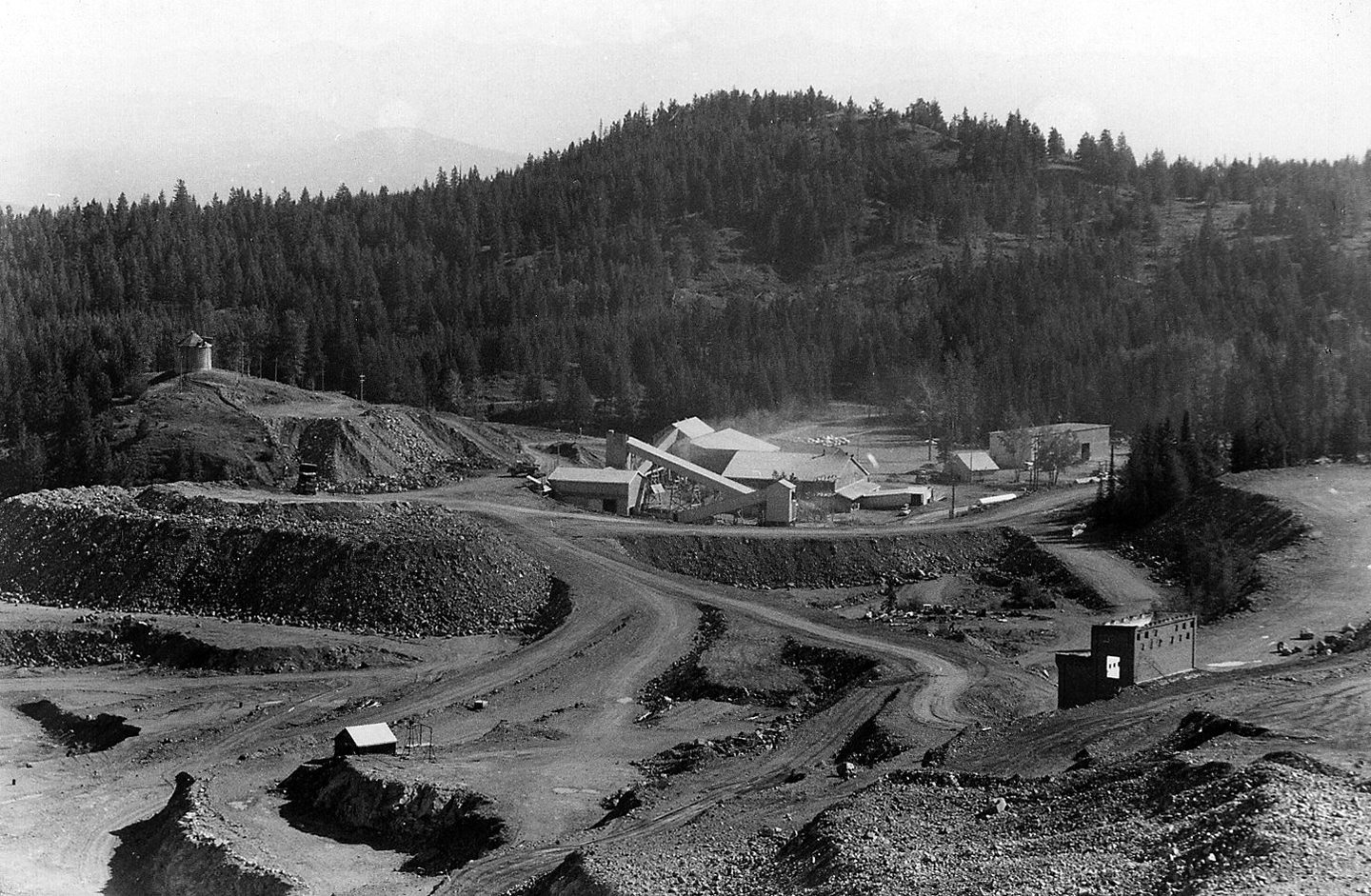
The hill in Plate I is not there any more. Granby bought the property back in 1955 and came at it from the top. Open-pit mining began in 1959 at 900 tons a day and climbed to 3,000, and by 1964 four pits were working. The pit ate the old underground workings and buried or bulldozed what was left of the town, until an oval hole 425 metres by 800 lay where the city had stood. Mining stopped in 1976; the mill ran on the stockpile into 1978.
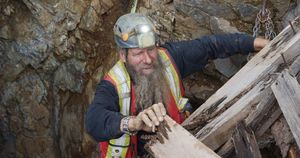
What survives from the photograph is what stood outside it. The cemetery is still on the hill, and the cenotaph the city built with the money from its skating rink was moved 1,500 feet before the blasting began, and stands. Frank’s camera goes into what is left of the workings so that nobody else has to.
More From the Journal
Out With FrankThe People Behind the Mine