History & DiscoveriesThen and Now
The People Behind the MineOut With Frank
The Journal →The Names on the Walls of the Union Mine
Deep in the Union, men wrote their names on the rock: F. McKie, June 9, 1937; T. McA., 23-4-41; GHT, Bralorne, 1946. Frank found them on his rope. The record knows the years, but not the men.
What is known
The names and dates as they are written on the walls, read on Frank’s films No. 62 and No. 66 (2017), and what the province’s reports and the papers record at the Union in those years.
What is inferred
That the men who wrote them worked in the Union. Every date falls in a year the record puts men there, but the reports name the companies and the lessees, not their crews.
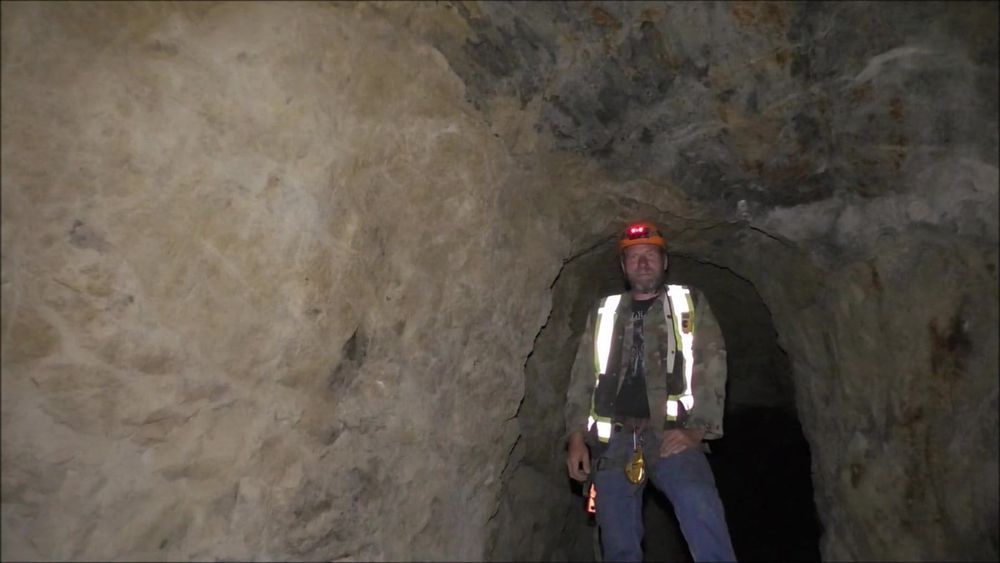
“Hey, everyone. Frank here.” It is 2017, and he is alone in the Union, at the top of a steep old working, his rope anchored to three heavy pieces of railway track. No one around here who does rope work wants to go with him, he tells the camera, “so I kind of have to go by myself if I want to explore this.” Then he goes down.
He is still near the surface, and daylight leaks in here and there. Around him the old stope rises in timber, “the timbering and stuff that the miners left behind”: square sets, frames locked together cell on cell to hold the ground as the ore came out. They built little platforms as they mined their way up, Frank says, and brought their planks up with them. He passes dynamite boxes, “all Polar Forcite gelatin,” and an old bottle. Twelve minutes into the film, his light falls on a name.
GHT, it says, in black on the pale rock. Under it, BRALORNE, and under that, 1946. And then: F. McKIE, June 9, 1937, and below it, W. McKIE. “So we’re getting close to the end here,” Frank says. The end of a working, where the digging stopped, is where the writing turns up: “That’s usually where you always see this, at the end.”
Later he finds TM and 4-8-42. “So ’42 they didn’t really mine here then,” he says. They were “just back in here doing some sampling and, as they always do, trying to find something else.”
In another film that year, with a climber along, his light crosses a wall crowded with initials: C.C. and 1933, H.C., A.F., T. McA. and 23-4-41. “See how it looks fresher, it is from ’41,” he says. “And the ’33 is a little more faded.”
Every one of those years is a year the record puts men at the Union. In 1933 the Hecla Mining Company was drilling for ore it never found. In 1937 A. J. Fee & Co. of Grand Forks had the mine on lease. In 1941 W. E. McArthur of Greenwood was working it under lease and bond with two to four men, and in June 1942 he gave it up. The last six tons went out in 1946 or 1947, shipped by C. E. and J. E. Small of Grand Forks: the province’s metal table dates them to 1946, its report to 1947.
None of the reports names the men who wrote on the walls, and the old photographs do not name the crews either. There were McKies in Grand Forks in the 1920s; if F. and W. McKie were among them, someone may still remember. Bralorne was one of the province’s great gold mines, far off in the Bridge River country. Whether GHT had come from there or was on his way, the wall does not say.
Hard Rock, by Hand
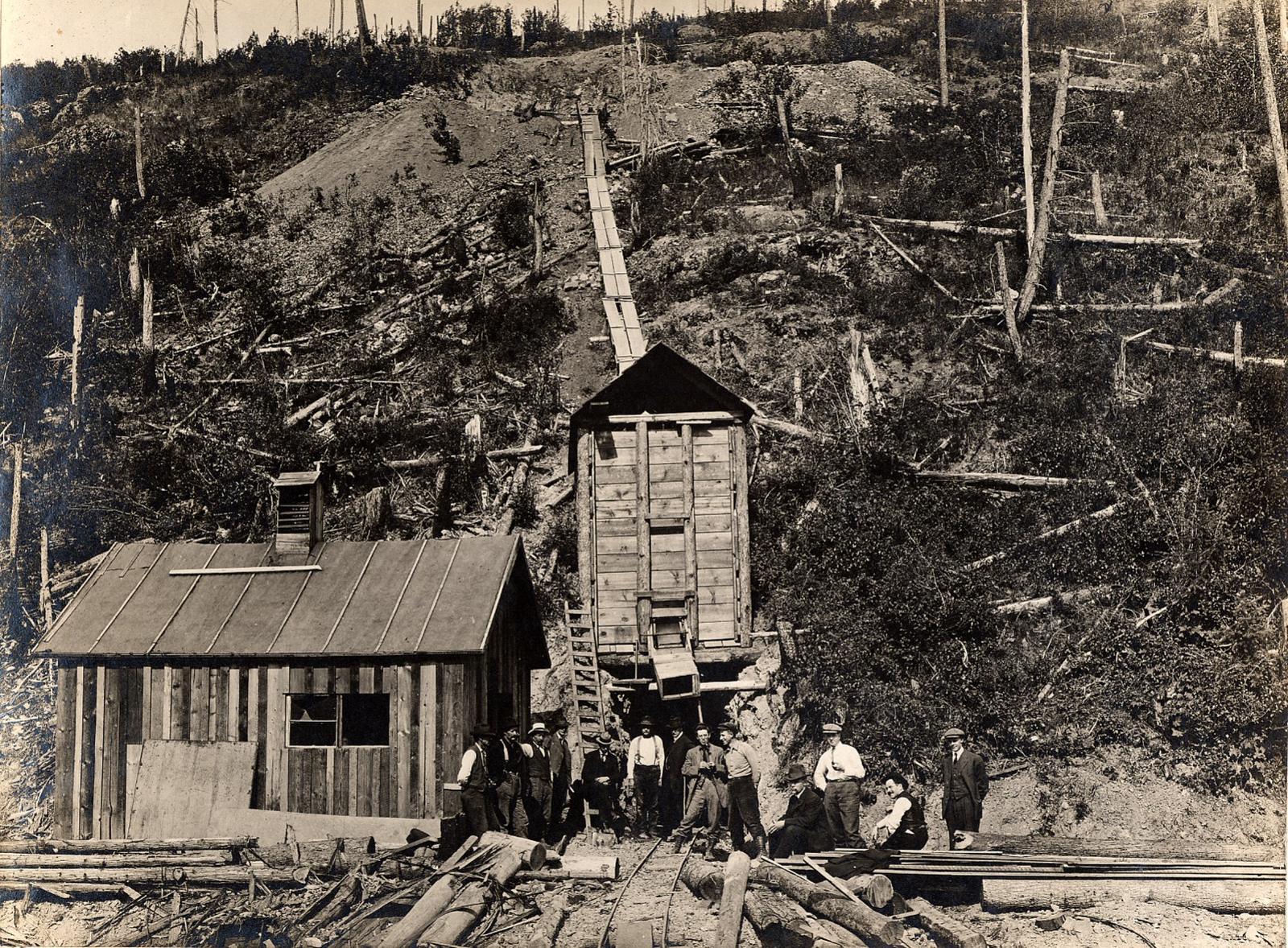
The first men on the Union had no company behind them. It was 1906, Franklin camp’s busiest year: two townsites were surveyed, a hotel opened, and the camp was “boomed extensively by mine promoters who freely made use of the newspapers.” That spring Mike McDonnell recorded the Union, and over the summer he sold a quarter of it to each of three partners: John Henderson, Lewis Johnson and Pat Maginnis. On a Tuesday in August, McDonnell and Maginnis struck galena, the heavy grey lead ore that carries silver, and by September a cut thirty feet long showed “solid galena from end to end.”
For six years the partners did their assessment work, the yearly labour that kept a claim alive, and paid no attention to a band of blue silica. McDonnell did not live to learn what it held. He was very probably the Mike McDonald who died at the Sisters’ Hospital in Greenwood in February 1911, after an illness of several months, and by August 1912 his quarter stood in the name of his estate. In 1912 a sample of the silica went to the assayer and came back with “astonishingly high values in gold and silver.”
In the summer of 1913 the partners cut into the rich ore from the surface, in the open cut the miners called the glory hole. They sacked it and sent it “down the hill on a go-devil”, a heavy sled, and Peter Hansen and Peter Peterson hauled it on by wagon to the railway. The first carload reached the smelter at Grand Forks on Wednesday, 27 August. By 1914 there were seventy horses and more on the haul.
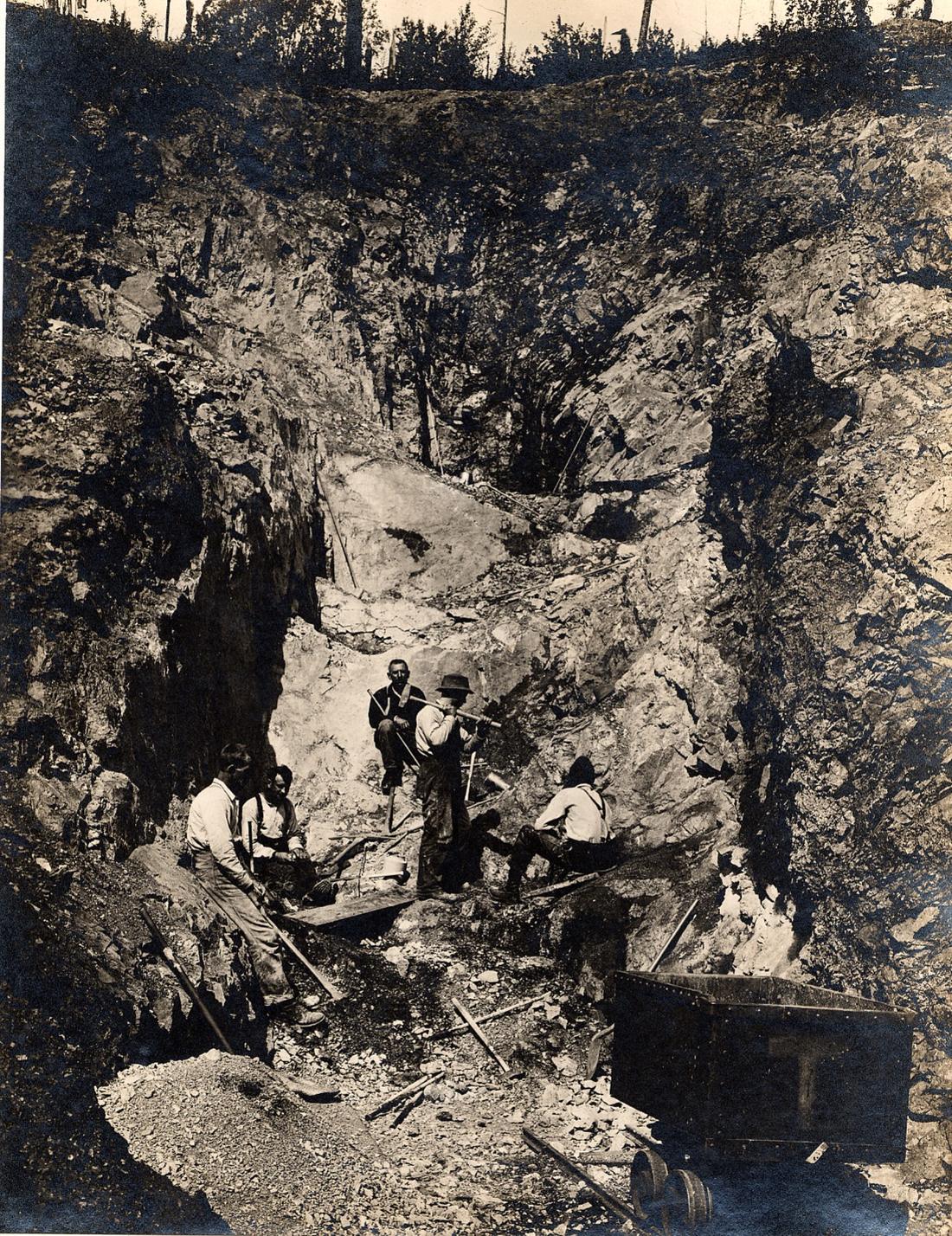
“This property is owned by two prospectors, Louis Johnson and Patrick Maginnis, and the estate of a third, deceased. With no capital, these two men have opened up their property and are now shipping from 30 to 40 tons of ore a day to the Granby smelter.”
A. G. Larson, for the Bureau of Mines, 1914
More than a century later, Frank was digging at the Union too. In 2019 he spent three days there, working his way through a collapse toward a lost level. “Problem is a little bit as you dig it out, more stuff slides down,” he says. “But I think we’re gonna get it.”
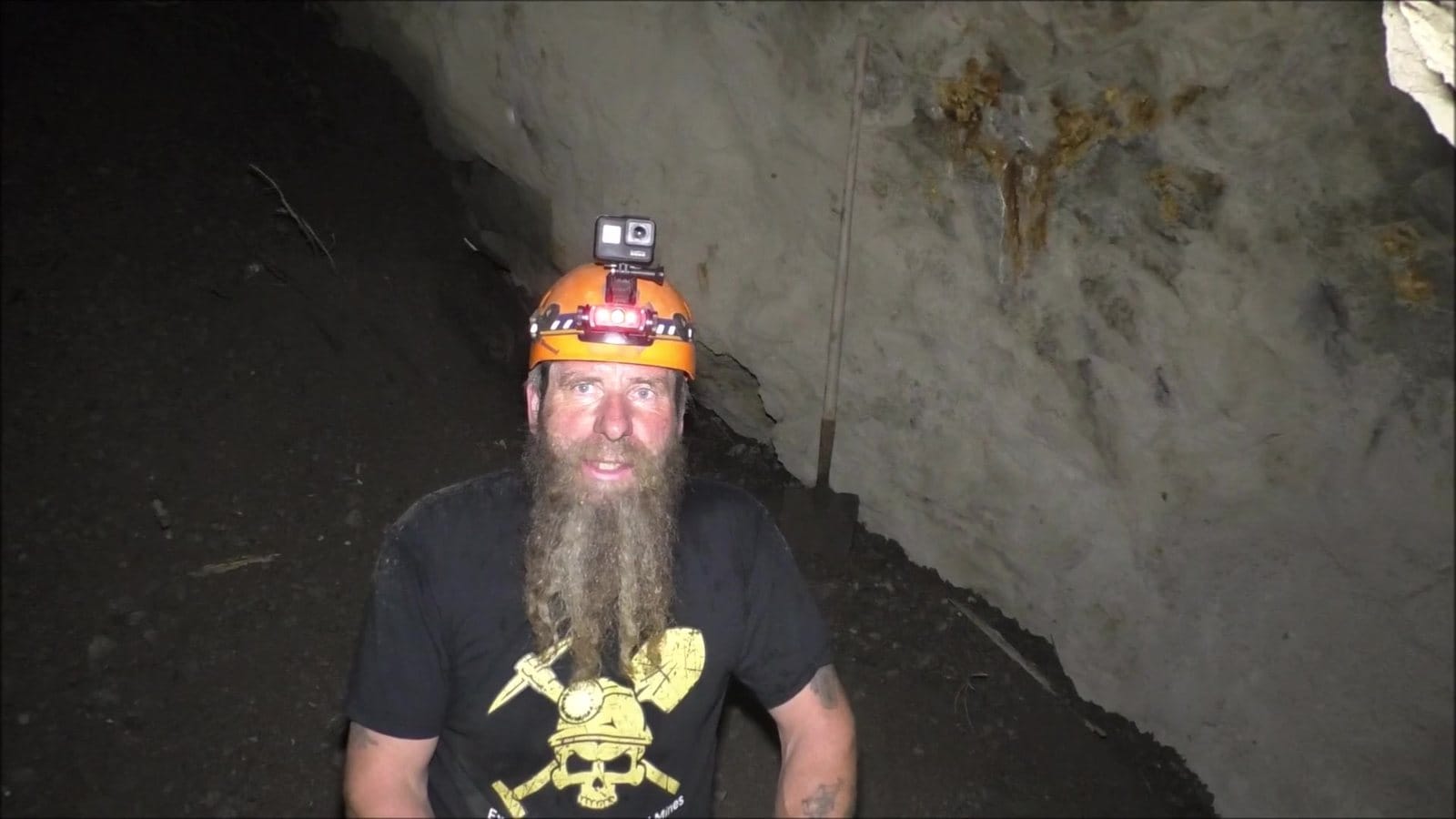
Later in that film, out on the hillside, he stands at the edge of an old trench and looks down at the cribbing the miners built into it, timber stacked log-cabin fashion. “Man,” he says, “could you imagine the guys that worked there put that stuff in there?” A bear has gone by just ahead of him, and what it left is fresh: “There’s almost steam on it.” The rock hangs out over the trench, and he decides against roping down. “I think I kinda pushed my luck enough this weekend.”
The Company Years
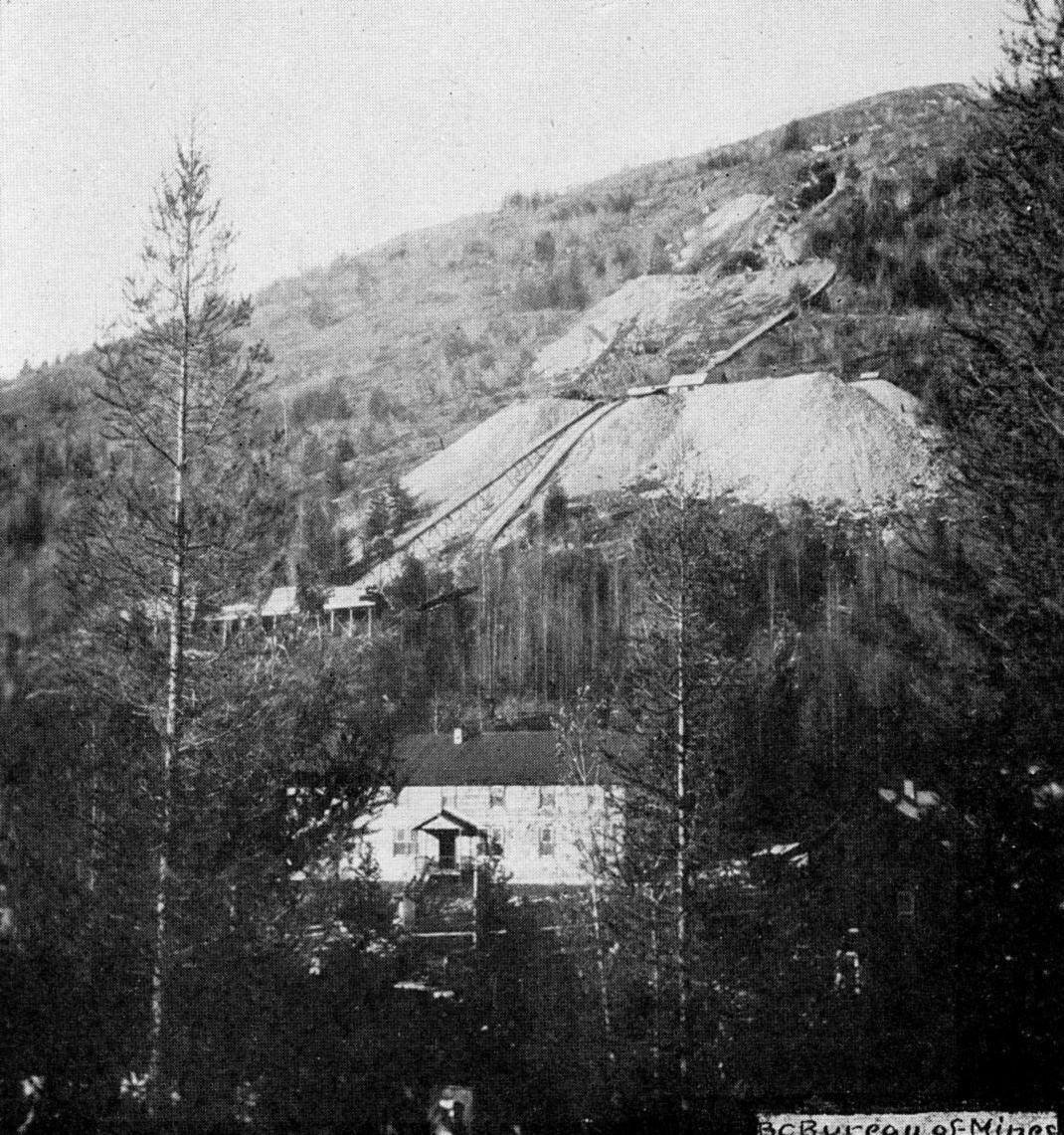
Then the company came. On Saturday 29 October 1927, twenty-one years after Johnson and Maginnis bought their quarters, the Hecla Mining Company of Wallace, Idaho, took a bond on the Union: an option to buy it, with every payment to come “out of ore or metal shipped”. Hecla drove a new haulage tunnel, No. 4, and its superintendent, Paul Schulz, built a mill and a camp. In 1929 sixty-four men were at work, the largest operation in the Grand Forks Division, and they slept two to a room in a new two-storey bunkhouse with “hot and cold water, electric lighting”.
In 1930 all the ore came down through the mine to No. 4 level, where “a mule and six dump-cars” trammed it out to the mill-bin. The mine ran all year, stopping only for breakdowns and a few days at Christmas, when the whole crew but four mechanics went down to Grand Forks and the other Boundary and Kootenay towns.
In his first Union film, in 2016, Frank finds rails still in place. “Railway tracks still in here,” he says, and by their width the ore cars were a good size. At an old chute he shows how the ore came down: “All this ore got from the top to the railway. They just pushed her down these chutes.” Then he calls down it: “Hello. Anybody down there?”
“1932, I believe, was the richest year they had here,” he says in film No. 62, and the record agrees: the Union made more gold that year than in any other, 19,218 ounces. Near the end of that film he finds a dynamite box with that very year in its top left corner: 1932. Then the rich ore was gone. The mill closed at the end of October 1932, and in 1933 the diamond drills went looking and found no more.
One man did not come home. Of all the men who worked the Union, he is the only one the record shows killed there. On Friday 3 October 1930 Joseph Sanigala was at the foot of a timber chute in No. 4 tunnel, loading steel, when rock came down the chute and struck him on the head. He died on the way to hospital. The mine closed the next day for the investigation. He left a wife and three stepsons, and after a requiem mass at Sacred Heart he was buried in Evergreen Cemetery at Grand Forks. He is on In Memory, the roll of the men who died in the province’s metal mines from 1906 to 1947, where each man is honoured with a brass tag. At many mines a miner hung his numbered tag on the board as he went underground and took it back when he came up. His was never taken back.
What Is Left
Up top, little is left. The mill’s footings are there, and the camp has been cleared and seeded over. Below, the workings belong to the bats now: in 2016 Frank went in to check a monitor left there for a bat survey, and it logged 41 calls, which he says were identified as Townsend’s big-eared bats. The vein stands almost straight up and down, and Frank goes through it on ropes. “Without ropes and really a lot of care, it’s a pretty dangerous mine to travel around,” he says. In one of the steep old stopes his light finds holes drilled for a blast that never came. “They drilled some of that stuff going up,” he says, “and they never blasted it.”
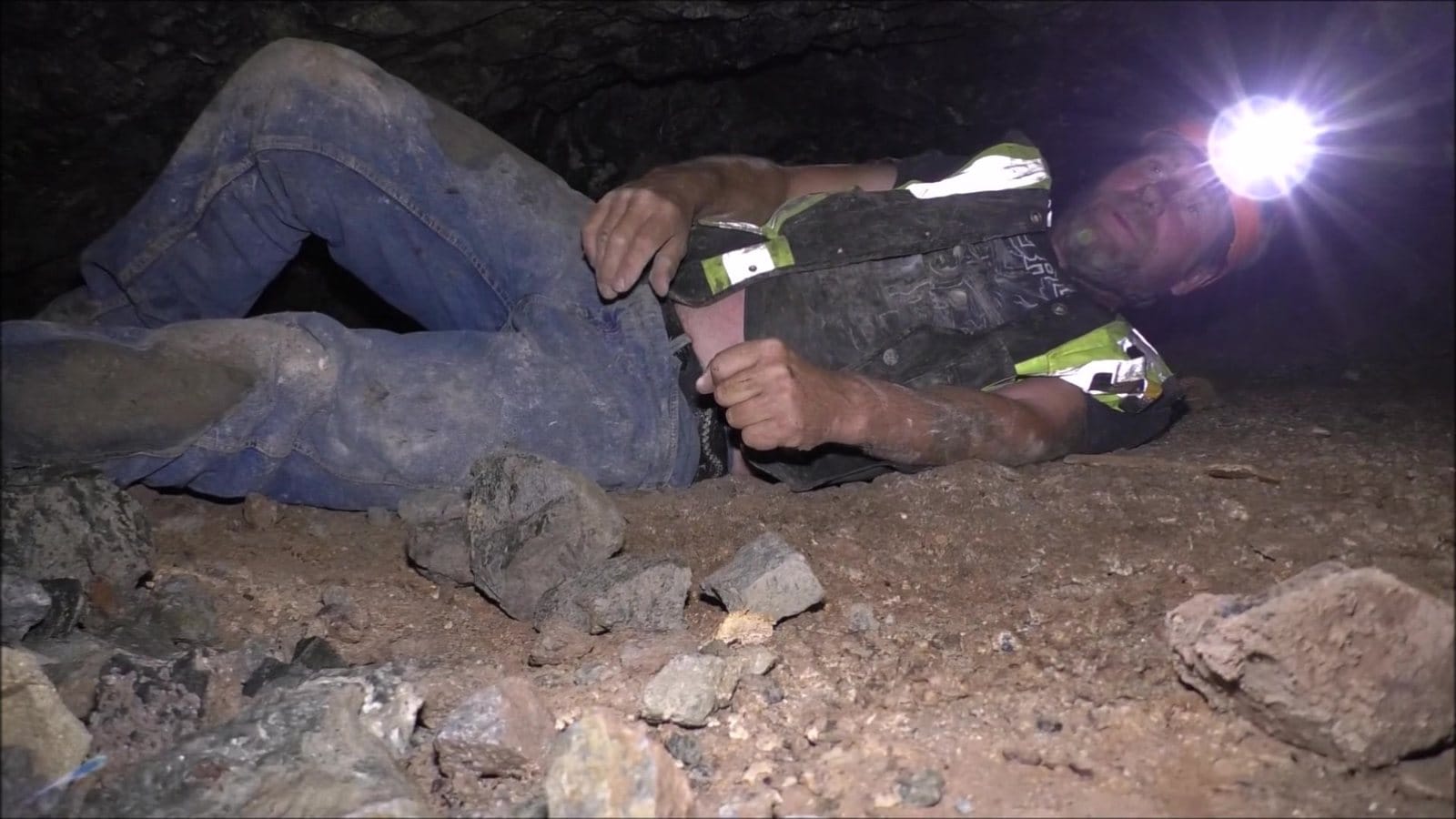
And on the walls, in black on the pale rock, the names wait in the dark: F. McKie and W. McKie, June 9, 1937. T. McA., 23 April 1941. GHT, Bralorne, 1946. Who they were, the record has not yet said. If one of them was your family, Frank would like to hear from you.
The whole story, from the trapper who gave the camp its name to the last six tons, is on the Union’s record, with the name of every man it knows.
More From the Journal
History & DiscoveriesOne Photograph